Why this school exists.
A letter from the founder.
My name is Dexter Saldaen, and I built Sacred Promise Institute because of a road that didn't go in a straight line.
I served in the Army, and I left the Army because my father had been diagnosed with cancer and he needed me. I took the uniform off and I came home. Almost as soon as I was back I went into healthcare, because the only way I knew how to love him the way he deserved was to learn, from strangers, the things a son isn't usually taught. That's the honest version. I didn't enter the field because I had a career plan. I entered it because the man who raised me was running out of time, and I was going to be the one at his side when the time came, and I needed to know what I was doing. So I trained. I worked. I cared for other people's parents and grandparents and spouses, and every shift was two jobs at the same time: the job in front of me, and the rehearsal for the job I knew was coming at home.
I was good at it. I was the person in the room who could stay calm when everyone else was falling apart, because this path demands that from you, and when you do it long enough you learn how to hold your own edges together no matter whose hand you're holding. I didn't take the pain home with me. I couldn't, or I wouldn't have made it through the next shift. I'd go from one family's worst day to the next family's worst day, and I'd be present for both of them, because being present is the whole job. I thought I was ready for anything.
Then it was my father, at home, and I learned that all the training in the world doesn't prepare you to professionalize the man you spent your whole life trying to be worthy of. I couldn't create the distance I'd learned to create for strangers. I didn't want to. He was my dad. I sat with him for months. I watched over him around the clock. I ran on almost no sleep. I did the things you do for somebody you love when there's nothing else you can do for them. And when it was time, I listened to his heart until there was nothing left to listen to. I finished the mission the only way I knew how, which was not to leave his side until it was done.
After he died I drifted. I had a business I focused on, because focusing on something was better than standing still. I wasn't grieving in any way anybody else could see from the outside. I was just moving. I think I was afraid that if I stopped moving, the weight of what had happened would land on me all at once, and I didn't know if I could carry it.
And then one day I hurt myself. Badly. Bad enough that I couldn't walk, and I had to learn how to walk again from the beginning. I'm not going to make that sound more poetic than it was at the time. At the time it was painful and it was slow and it was humiliating in the way only having to relearn something your body used to know can be. Something inside me was healing at the same time. I didn't plan it and I didn't ask for it, but somewhere in the slow work of putting one foot in front of the other, a door that had quietly closed on me after my father's death started to come open.
I went into education next. At first I thought that was the new chapter, a way to contribute that didn't require me to stand at another bedside. But the longer I engaged in career services, finding graduates jobs, the more I found myself looking back at the medical field with clearer eyes than I had when I was inside it. I could see where the training was turning into a box checking exercise. I could see where the standard was being allowed to slip. I could see where character was being treated as optional instead of as the whole foundation the work has to stand on. And I could see where families were trusting their parents and grandparents and spouses to people who hadn't been trained well enough and hadn't been held to the kind of standard my own father deserved, the kind of standard I'd tried, in my own exhausted, not-prepared-for-this-particular-patient way, to hold for him.
That's when I understood what had to be done. It wasn't to go back to the bedside myself. I'd done my tour there and I knew it wasn't the door I was supposed to walk back through. The move was to build the place the next generation of caregivers comes through. To rebuild the trust that has been quietly eroded in the healthcare community. To enforce a standard of training and a standard of character that nobody on my watch is going to be allowed to let slip. To turn out the best of the best, not because it sounds good on a brochure, but because the families who end up needing these caregivers can't settle for anything less, and neither can I.
That's why Sacred Promise Institute exists. That's why we take twelve students in a cohort and not fifty. That's why Jimlaine runs the nursing side, because her last teaching assignment where we worked together finished with every single student passing the state exam, and that number isn't an accident, it's the result of holding the standard the way the standard is supposed to be held. That's why the school is south of the 8, in the community I belong to, training the people who are going to care for the parents and grandparents and spouses of the families who live here. I built this school because I know what it looks like when the work is done right, and I know what it looks like when it isn't, and I'm not willing to keep watching the second version happen. My father deserved better than the version of the system he would have gotten if I hadn't been there. The next son or daughter sitting up through the night with somebody they love deserves to trust that the professional walking through the door was trained by people who have held that same watch themselves, and who won't let the standard drop, ever, on this side of the threshold.
If you read the whole letter, I'm expecting you.
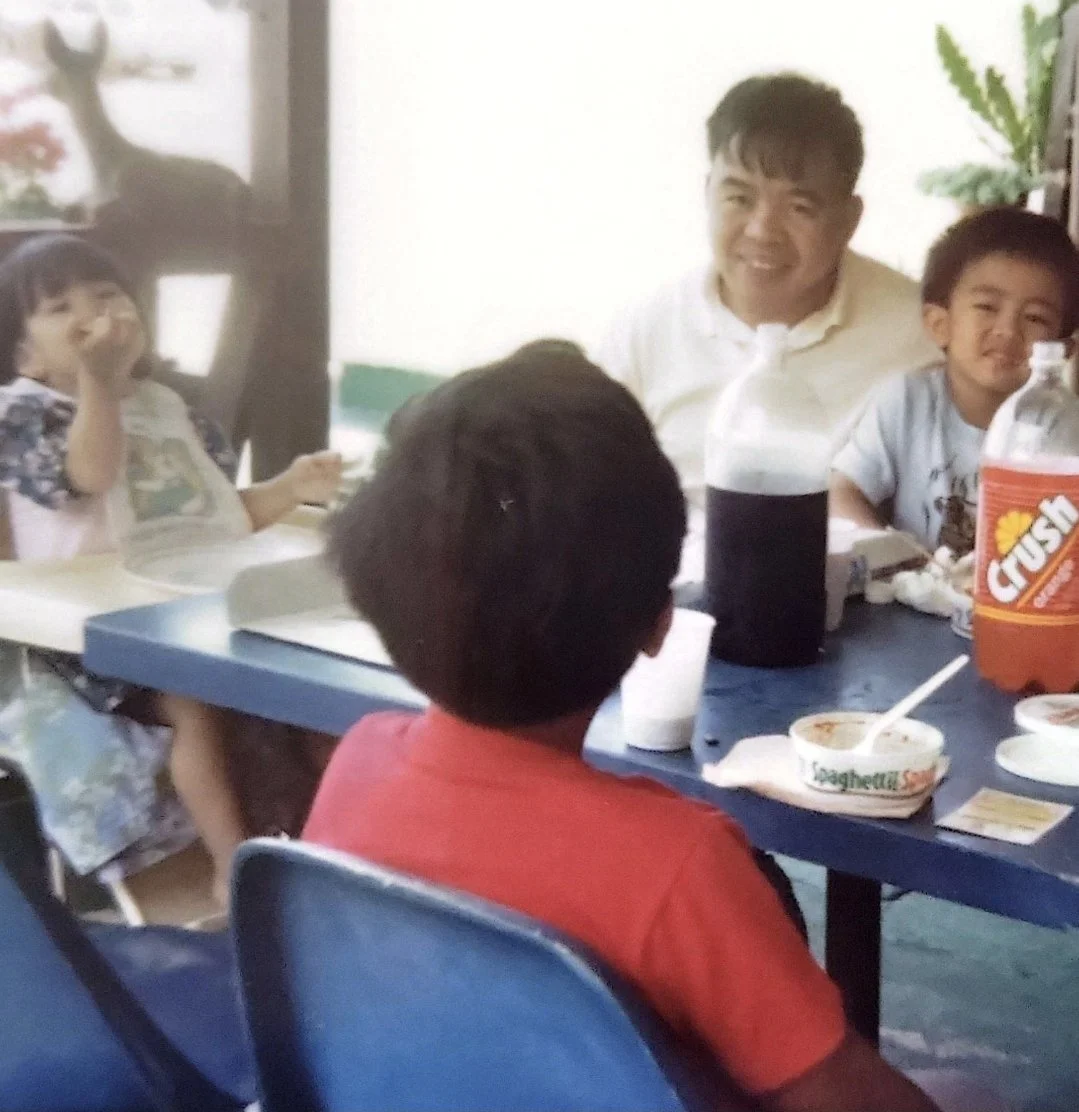
Dad, my siblings, and I.